(sorry I thought I sent this!) Late Breaking
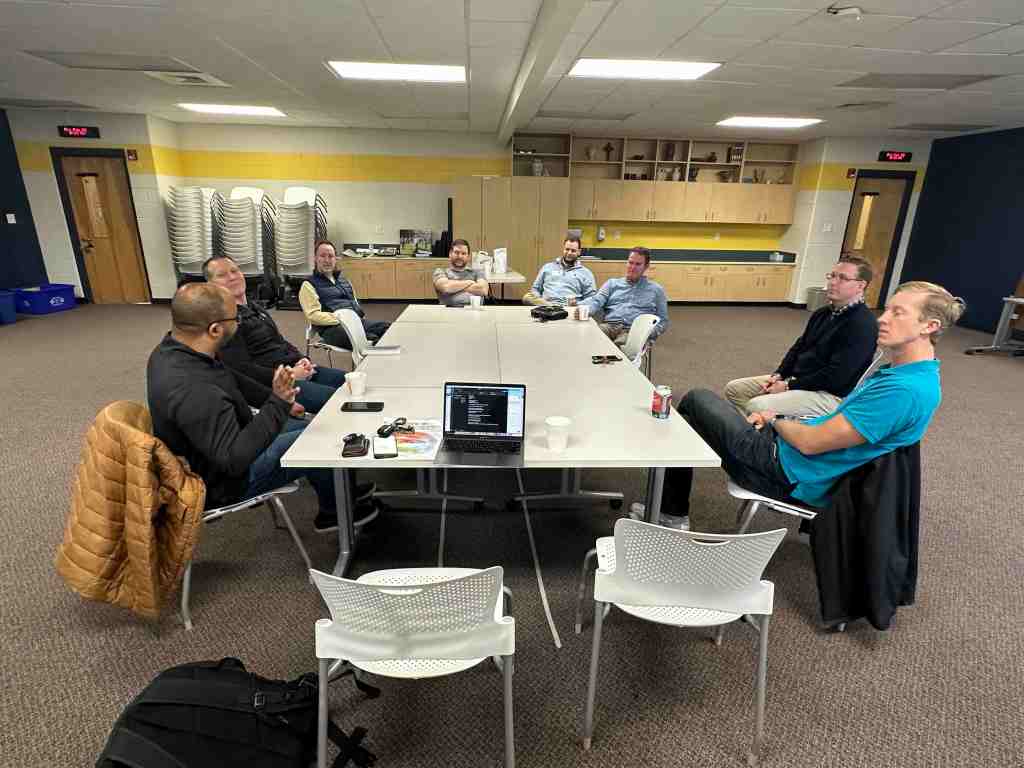
This week we talked about how we tried to put into practice what we discussed last week.
Practical Implementations
Paul talked about sitting down with his children and talking about how God made us with emotions, that Jesus had emotions “Jesus Wept,” and then talked about emotions.
He had his children draw their own scale of what emotional situations would be (from 1 to 10)…His children came up with the following:
- 2 – Character dying in a movie
- 3 – Getting an undesirable present
- 5 – Getting a bad grade at school
- 7 – Getting beat up at school
- 9 – Someone dying
They also talked about what they thought the emotional scale from 0-10 should be for parents (0 – Eating on the Carpet) 😀 .
They talked about how you can over-react or under-react to a situation.
Nathan C. mentioned that pain can be relative to a person’s background, so each one creating their own scale makes sense .
Nathan R. mentioned that some of the men that have been in the media in epitomizing what a man should be as “stoic” is detrimental. This is because unexpressed emotions always end up coming up sideways.
Paul asked the question to how this was modeled to the men in the room by their parents, and most dads seem to have been taught to not acknowledge emotion or to “stuff” them.
Andy talked about reading about girls and how they tend to deal with anxiety and worry more than any other emotion. They overestimate the situation and underestimate themselves. Helping them to evaluate the situation and see themselves for who they fully are is key.
Paul talked about how his wife is really good at expressing the emotion and, while it may come out messy, once its out then its done and over with. He finds it harder to express and then finds it might come out sideways.
Chris talked about how learning how to let your children and spouse name the emotion and reflecting it back “So you are feeling this because this happened and you wish that this happened” allows for the person to vent the emotion and be heard. As long as emotion is being expressed you meet it by reflecting the emotion back. Once the emotion has been let out, like the air out of a balloon, then its natural for the prefrontal cortex to kick in and the situation can be logically resolved.
Putting It Into Practice – Actions For Next Week
- Sit with our children and talk to them about emotions
- Have our children make a scale (1 to 10)
- Make a scale with our spouses and compare 🙂
- Put the scale up in the children’s room
- Practice reflecting emotions back until logic is able to be applied
- Bracket the problem -> If the emotion is a 8, then talk about what the worst possible result could be. This all creates property
 Trinity Dad's Coffee
Leave a comment