
We moved to the Library for this week (back upstairs next week)
Last week – Putting it into practice
Carr talked about how his enjoyment during Spring Break was put in Subservience to his family’s enjoyment.
Paul talked about how he noticed that his children watching a show about someone exploring nature led to his children going out and exploring nature themselves. He wondered how the media that his children consumed led them internally. It seemed as though creating (going out and interacting with nature) was more helpful than watching someone else create on YouTube (making a minecraft building). The question was posited whether it’s helpful to watch others create or to be the creator.
Discussion – Naming

The key to naming is having the vocabulary to express our emotion with precision and accuracy.
We went back to the emotion wheel to talk about what how we are feeling (By The way this isn’t the best emotion wheel in the world, it’s just what I found that I could print today 🙂
The Importance of Naming – My Story

My dad’s obituary is above. It doesn’t really tell the whole story.
He died because he committed suicide. His wife and I found him. The aftermath was terrible. My uncle (his main business partner) died of a sudden heart attack six months later. There were many legal battles to be had. There was no will. It was a mess that I had to clean up while dealing with the fact that my dad killed himself and left me to mop up the mess he left behind.
I was angry for a long time. I was bitter. That bitterness affected me in ways I didn’t realize and my wife had to deal with the brunt of it. I finally started working through my grief with a counselor in 2013, six years later.
What Is Grief? More than you may think…
We often think of grief in the context of death, dying, divorce, or sickness.
Here is more scientific definition given by the book that I used to process my grief:
Grief is the conflicting group of human emotions caused by an end to or change in a familiar pattern of behavior. Thus, any changes in relationships to people, places or events can cause the conflicting feelings we call grief.

My own definition is a bit more relatable: “Grief Happens when your expectations aren’t met.”
Grief is usually met with anger, and every counselor I’ve ever been to has told me that anger isn’t a primary emotion. It’s a emotion that is used to cover up another emotion: usually fear or sadness.
Grief can always come out sideways if it’s not dealt with. With kids it can come out by aggression or isolation. Same with us.
I needed to go through a long process of looking back and mapping out the highs and lows of my relationship with my father. I needed to talk through and write out everything that I wish had happened different, all the things that I wished he did, and all the things I wished he said. I also all needed to write out and process all the things that I wanted to say and all the things I wished I had done differently.
Processing everything in the manner above allowed me to grieve. It also allowed me to forgive. I helped me to ask forgiveness for the things that I should have done differently as well.
I knew that I had healed in a major way when I watched the movie “The Great Gadsby” and saw the main character take his life the same way that my father had. I openly wept in the theater because I felt so much compassion for my father. I thought, “wow, my father must have been in such a terrible tormented place to take his life that way.”
My anger was replaced with sadness, which was replaced with compassion.
Name That Feeling…
Hopefully you never have to find someone that you love the way that I did.
Hopefully you never need to grieve something that terrible.
But you need to grieve, and probably every day. There are things that happen to you and ways that people treat you that are not as you expected, and they make you angry…
or sad..
or afraid…
The first step is to sit with yourself and figure out what you are feeling. Express it to God. Express it to a friend.
By naming it, it allows you to process it, breathe, and then decide what to do (cope) with it.
Putting it into Practice
This week our primary way that we are putting it into practice is by using the emotion wheel. This website has a ton of variations. You can order them on Amazon in different permutations as well…magnets and all kinds of things.
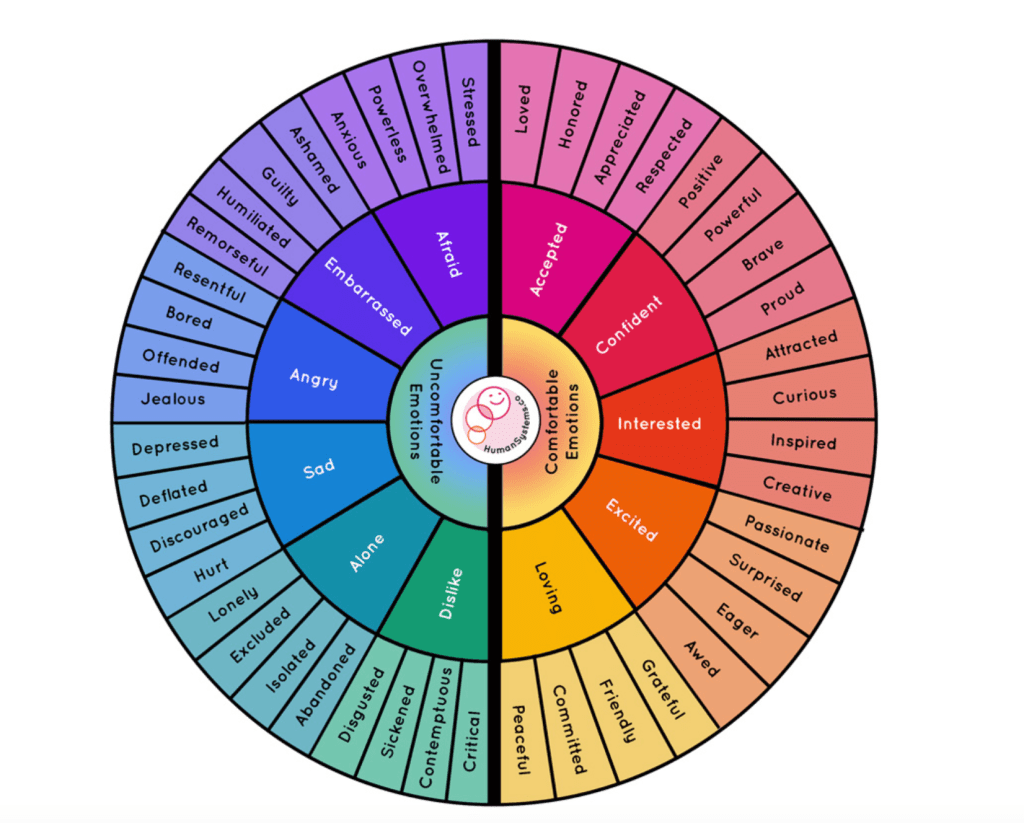
- Incorporate more specific emotional vocabulary into your regular conversations
- Talk about one “outer ring” emotion with your family at dinner.
- Define one “outer ring” emotion with your family.
- Use the “emotion ring” in conversations with your children. Help them name emotions, breathe, and cope.
 Trinity Dad's Coffee
Leave a comment