A men’s group reflection on family of origin, aligned parenting, and the power of repair
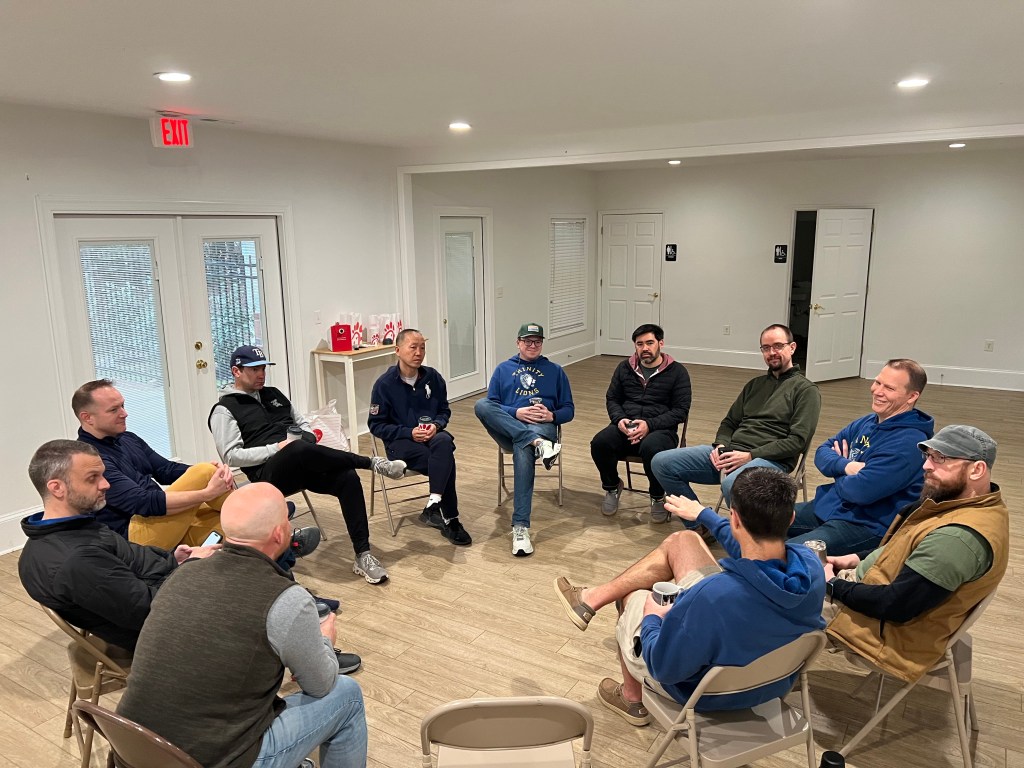
Previous Week In Practice
The men came back this week with some real stories of putting last week’s teaching on marital unity and family of origin into practice.
One father shared how he immediately put the “two yeses or one no” rule to work in his home. The principle is simple: if either mom or dad says no, that’s the answer. The kids need two yeses to move forward. He laughed about using it that very morning when his six-year-old tried the classic line — “But Mommy said I could!” His response? “Remember the rule: if Mommy or Daddy says no, it’s a no.” The boy went quiet. It’s a small moment, but it’s the kind of consistent, united front that Scripture calls us toward. “A house divided against itself cannot stand” (Mark 3:25).
Another dad took last week’s encouragement to read the same material as his wife and ran with it. He’d been trying to get his oldest son to read something substantive, so he offered to pay him to read Plato’s Republic and write a one-page report. The kid liked the deal — just not the actual reading part. But the real fruit came when he and his wife started talking about books that had shaped him, and she agreed to read one together. That conversation moved them toward a shared vocabulary and shared sources for parenting — exactly what unity looks like in practice. As Amos 3:3 asks, “Do two walk together, unless they have agreed to meet?”
One couple picked up John Mark Comer’s Practicing the Way workbook and committed to going through it together — building a shared rule of life. Another father reflected on how processing his and his wife’s family of origin had opened his eyes to patterns he’d been repeating without realizing it. His dad had been largely absent from parenting decisions, and now he recognized that same pull in himself — the temptation to withdraw when things get heated rather than stay engaged. That awareness became a turning point.
The Decision-Making Balance
One of the richest parts of the conversation centered on how couples divide decision-making authority. Several men estimated their split at 60/40 or 70/30, but the real honesty came when they admitted those numbers shift. One man’s daughter, playing a card game, said she’d want to be Mama for a day so she could “be the boss.” That got a laugh — and a reality check.
The truth is, the balance isn’t static. It shifts based on the season, the workload, and who has the bandwidth on a given day. One father put it well: “It’s a sliding scale. Some days my work has been heavy with late nights, and it’s all on her. Vice versa for her.” The consistency isn’t in a fixed percentage — it’s in a consistent message, consistent expectations, and a consistent standard coming from both mom and dad.
This is the picture Paul paints in Ephesians 5:21–33 — mutual submission, sacrificial love, and a partnership that reflects Christ’s relationship with the Church. It’s not about who holds more power. It’s about stewarding your household together so the kids see one voice, one standard, and one Lord behind it all.
Stay the Course: The Long Game of Parenting
One of the most powerful moments came from a father of adult children who shared a story that has stuck with the group for weeks. When his daughter was a teenager, she fought hard against their rules around cell phone use. One time, when they went to take her phone away, she literally ran out into a thunderstorm rather than hand it over. It was one of those gut-check parenting moments where you wonder if you’re doing the right thing.
Fast forward to age 22. That same daughter now coaches kids in gymnastics and sees firsthand what unrestricted screen access does to young people. She came back to her parents and told them plainly: “You were not hard enough on us with the cell phone. You should not have given us that much access that early.”
Brothers, that is a long-game testimony. Proverbs 22:6 says, “Train up a child in the way he should go; even when he is old he will not depart from it.” The fruit doesn’t always show up in the moment. Sometimes it takes a decade. Stay the course.
Several fathers also wrestled with the tension between protecting their kids and letting them fail. One shared how his daughter was unprepared for a Spanish presentation at school, and rather than rescuing her, he told her she’d be the one looking foolish — so she’d better practice. The group affirmed the idea of the home as a safe laboratory for experimentation and failure. Better to let them stumble under your roof at age eight than to send them into the world at eighteen having never tasted the consequences of their choices.
The Power of Repair
Perhaps the most convicting part of the discussion was around the practice of repair — apologizing to your kids and your wife when you blow it.
One father attended a talk by Dr. Becky Kennedy, who shared a striking statistic: when she asked an audience of parents how many of them had ever experienced a “repair moment” from their own parents, only about four percent raised their hands. Four percent. That means most of us grew up in homes where apologies from parent to child simply didn’t happen.
The encouragement? We’re breaking that cycle. As 1 John 1:9 reminds us, “If we confess our sins, he is faithful and just to forgive us our sins and to cleanse us from all unrighteousness.” If God models repair and restoration with us, how much more should we model it with our children?
Another father referenced research suggesting that if you’re attuned to your child’s needs just 30 percent of the time — and you repair the rest — your kids will grow up saying they had really good parents. The bar for attunement isn’t perfection. The bar is humility. The willingness to say, “That must have been scary for you. Daddy’s still working on handling that better.”
One man also shared how being quick to apologize to his wife had been transformative, but that it took years before his apologies became truly sincere rather than transactional. He realized his pride had been masking a deeper resistance to admitting fault. That’s the kind of sanctification God does over a marriage — slow, honest, and deeply good.
Four Pillars of a Healthy Marriage
The group also revisited a video shared in their chat about four practices that strengthen the spousal bond: have more fun together, pray together, make eye contact when you talk, and always be touching. The science behind eye contact alone was striking — women receive three times the oxytocin from eye contact that men do, which means it’s far more important to your wife than you probably realize. And physical touch? That one’s more important for men than they’d like to admit. These aren’t just nice ideas — they’re neurological pathways toward the one-flesh unity God designed marriage to be (Genesis 2:24).
Actionable Steps for This Week
1. Establish the “Two Yeses, One No” Rule. Sit down with your wife and agree that any decision the kids bring to either parent requires agreement from both. If one says no, that’s the answer. Communicate this clearly to your children so they understand the standard.
2. Start Reading the Same Book or Workbook With Your Wife. Pick one book — whether it’s a parenting resource, a marriage workbook, or a theological text — and commit to reading it at the same time. Schedule a weekly conversation about what you’re learning. The goal is a shared vocabulary and a shared vision for your home.
3. Process Your Family of Origin Together. Set aside an evening to talk with your wife about what you each saw modeled growing up. What did decision-making look like? Who enforced the rules? What patterns are you repeating — and which ones do you want to break? Be honest and curious, not defensive.
4. Practice Repair This Week. The next time you lose your temper, overreact, or make a poor parenting call, go to your child and say something like: “That wasn’t okay. I’m sorry. I’m still learning how to handle that well.” Then do the same with your wife. Don’t wait for the perfect moment — repair quickly.
5. Punt Decisions You’re Unsure About. When your child asks you for something and you’re not sure if you and your wife are aligned, say: “The answer is no until Mom and I have a chance to talk about it.” This buys you time, keeps you unified, and teaches your kids that Mom and Dad operate as a team.
6. Implement the Four Pillars Daily. Choose one of the four practices — fun, prayer, eye contact, or physical touch — and be intentional about it every day this week. Look your wife in the eyes when she talks to you. Reach for her hand. Pray together before bed, even if it’s just thirty seconds. Small, consistent deposits build deep connection.
7. Let Your Kids Fail in the Safety of Your Home. Identify one area where you’re tempted to rescue your child from a consequence. Step back and let them experience it. Be available to help them process afterward, but resist the urge to prevent the lesson. Your home is the safest place for them to learn resilience.
 Trinity Dad's Coffee
Leave a comment