Previous Week In Practice
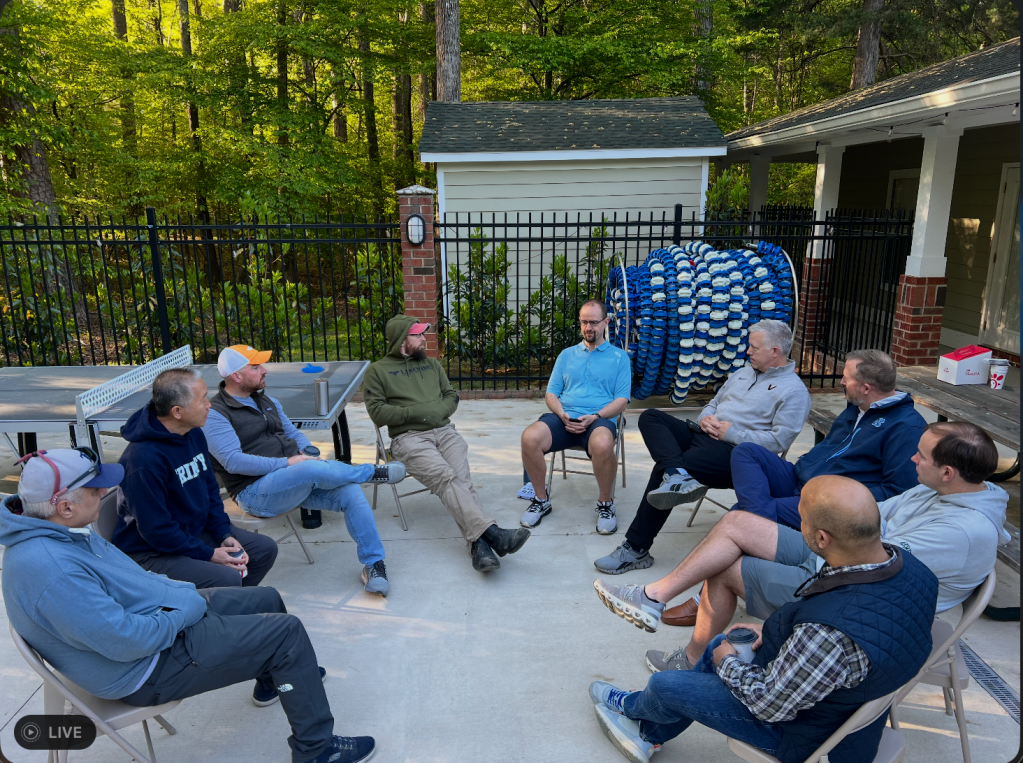
One of the fathers in our group shared a moment that stopped all of us in our tracks. He’s been working toward a goal of building passive income so he can eventually free up more time to spend with his kids. He sat down with his fifteen-year-old son, and was honest with him — telling him he wished he could make it happen before he leaves the house, but that it might take four more years.
Ben’s response was pure gold: Dad, you’re here a lot. You are around. Other dads have to travel. You’re present. We do things together.
This dad told us it was the most encouraging thing he’d ever heard from his son. It spoke directly into the thing he cares most about — being a present, engaged father. And it came from the one person uniquely positioned to confirm it: his own child.
It also recalibrated his thinking. If the thing he’s been striving toward is already happening to some degree, maybe the goal isn’t always out on the horizon. Maybe it’s also right here, tonight, in the next conversation, in showing up again tomorrow. As Ecclesiastes 3:12-13 reminds us, *”I know that there is nothing better for people than to be happy and to do good while they live. That each of them may eat and drink, and find satisfaction in all their toil — this is the gift of God.”*
The takeaway hit all of us: don’t let the pursuit of a better future rob you of the good that’s already unfolding in the present.
Summer Is Coming — Are You Ready?
With summer just weeks away, our group turned to a question every dad faces whether he realizes it or not: What kind of summer are you going to give your kids?
Not what camps are they enrolled in. Not what vacation is booked. But what will your children remember about this summer ten years from now — and will you be in those memories?
We started by looking backward. Each dad shared his most vivid summer memory from childhood. One remembered a multi-day beach camping trip with his family — sleeping outdoors, taking showers on the beach, the simplicity of being together somewhere new. Another recalled a cross-country road trip in a VW camper van, visiting the Grand Canyon, Mount Rushmore, and Monument Valley, playing cards and listening to a Sony Walkman with his sister. A third remembered his dad planning an elaborate baseball stadium road trip across several cities — a feat of pre-internet logistics that he didn’t fully appreciate until he became a father himself.
What stood out was this: none of these memories were expensive. None required perfection. They were built on time, togetherness, and a father who showed up.
Proverbs 22:6 says, *”Train up a child in the way he should go; even when he is old he will not depart from it.”* Training isn’t limited to discipline and doctrine. It includes the traditions, rhythms, and shared experiences that shape how your children see the world — and how they remember you.
It Doesn’t Have to Be Grand — It Has to Be Intentional
One of the most convicting shares came from a dad who admitted that when he looks back on his childhood summers, his parents aren’t really in the picture. Not because the memories were bad — they just weren’t there. He was shipped off to grandparents or spent time with friends. That realization has fueled a fierce intentionality in how he approaches summer with his own kids.
Last year, he built an entire spreadsheet mapping out every day of the summer. He identified windows for teaching his kids to cook, introducing them to fly fishing, and even having deliberate conversations about the value of money. This year, he’s planning to teach them golf. His kids now look forward to what they call “Poppy’s cooking camp.” None of it cost much. All of it mattered.
Another dad shared how he and his daughter take the same trip to Virginia Beach every summer for her birthday — four years running. She talks about it all year long. Her Barbies go to Virginia Beach. The consistency of the tradition has become the treasure.
As Deuteronomy 6:6-7 instructs, *”These commandments that I give you today are to be on your hearts. Impress them on your children. Talk about them when you sit at home and when you walk along the road, when you lie down and when you get up.”* Summer gives us extra “road” to walk with our kids — if we choose to walk it.
The Screen Time Battle
No summer planning conversation is complete without addressing screens. Several dads wrestled openly with this one. One shared how his daughter’s creativity — her beautiful artwork that covers the kitchen walls — disappears when screens dominate her time. He made the intentional choice to cut back, replacing screen time with creative space. He leaned into positive reinforcement rather than just saying no: *”What gets rewarded gets repeated.”*
Another dad is considering declaring a full screen-free stretch for his kids this summer, wanting them to rediscover the baseball-card-sorting, backyard-playing, book-reading rhythm of an unscheduled afternoon.
But here’s the conviction that landed hardest: if you take the screens away, you’d better be willing to fill the space. One dad’s daughter calls him out when she catches him doom-scrolling YouTube Shorts. “Daddy, are you watching videos again? Get off your phone.” If we ask our kids to put down their devices, we have to be ready to put down ours — and be fully present when they ask us to throw the ball.
Colossians 3:23 tells us, *”Whatever you do, work at it with all your heart, as working for the Lord.”* That includes the unglamorous work of being bored alongside your children and letting creativity grow in the silence.
Don’t Let Perfect Be the Enemy of Present
One of the most freeing reminders from our conversation was this: you don’t need a Pinterest-worthy summer. You don’t need to throw money at experiences to make them meaningful. A five-dollar shaved ice on a Friday afternoon can become a cherished tradition. A weekly rhythm — Saturday morning pancakes, Wednesday evening walks, a lunch-break game of catch for dads who work from home — can string together a summer your kids never forget.
The group also discussed the importance of letting kids have a voice. Let your six-year-old help pick activities from a list. Let your teenager weigh in on the plan. When children co-create the summer, they own the memories.
And don’t forget: summer is also a “safe laboratory” to cede territory to your older kids. Let your fourteen-year-old manage her own homework schedule. Let your seventeen-year-old plan a day trip. These are the proving grounds where responsibility takes root.
Actionable Steps for an Intentional Summer
1. Set Three Summer Goals. Sit down this week — before summer starts — and write down three things you want your kids to experience or learn this summer. Keep it simple: a skill, a tradition, a conversation topic. Write them on paper, a whiteboard, or even paint them on a rock with your kids.
2. Map Your Available Time. Pull out a calendar and identify every day you’ll have with your kids this summer. Mark pre-planned camps, trips, and commitments. Then look at the open days and ask: What could I do with this time that my kids will remember in ten years?
3. Build Weekly Rhythms. Choose one or two recurring touchpoints each week — Friday shaved ice runs, Saturday morning breakfast together, a weekly cooking lesson. Consistency creates anticipation, and anticipation creates joy.
4. Create a Screen Time Plan Before Summer Starts. Decide now what your household’s screen boundaries will be. Whether it’s earning screen time after outdoor play and reading, or going screen-free for a set period, have the conversation with your spouse and your kids before June hits.
5. Use Your Lunch Break. If you work from home, block out one lunch break per week to spend thirty to forty-five minutes with your kids. Throw the ball, make a sandwich together, or just sit on the porch and talk.
6. Involve Your Kids in the Planning. Give your children age-appropriate ownership. Let younger kids choose from a list of activity options. Let older kids plan an outing or lead a project. Shared ownership leads to shared memories.
7. Teach One Life Skill. Cooking, fishing, budgeting, changing a tire, growing a garden — pick one thing you can teach over the course of the summer through repeated, low-pressure practice sessions.
8. Schedule Unscheduled Time. Resist the urge to fill every hour. Boredom is the birthplace of creativity. Leave white space on the calendar and let your kids discover what they do when nothing is planned.
9. Lead by Example with Your Own Devices. You can’t ask your kids to put down screens if you won’t put down yours. Set your own boundaries and be transparent about them. Let your kids hold you accountable.
10. Pray Over Your Summer. Before the plans are finalized, bring them to the Lord. Ask Him what He wants your family to experience this season. As James 4:15 says, *”If it is the Lord’s will, we will live and do this or that.”* Surrender the spreadsheet to the One who holds every day in His hands.
 Trinity Dad's Coffee
Leave a comment